

Is your teen being cyberbullied? Learn the warning signs every parent should know, how to talk to your child about it, and exactly what steps to take in 2026. This guide also highlights online safety tips for parents and how to recognize the signs your child is being bullied online.
Technology is woven into every part of our daily lives and for children, it’s no different.
The typical age for a child to get their first device is around 8 years old. This indicates that children are exploring the internet much earlier than many parents understand the potential dangers. Parents are increasingly concerned about the social media effects on teen mental health, particularly as it can amplify bullying.
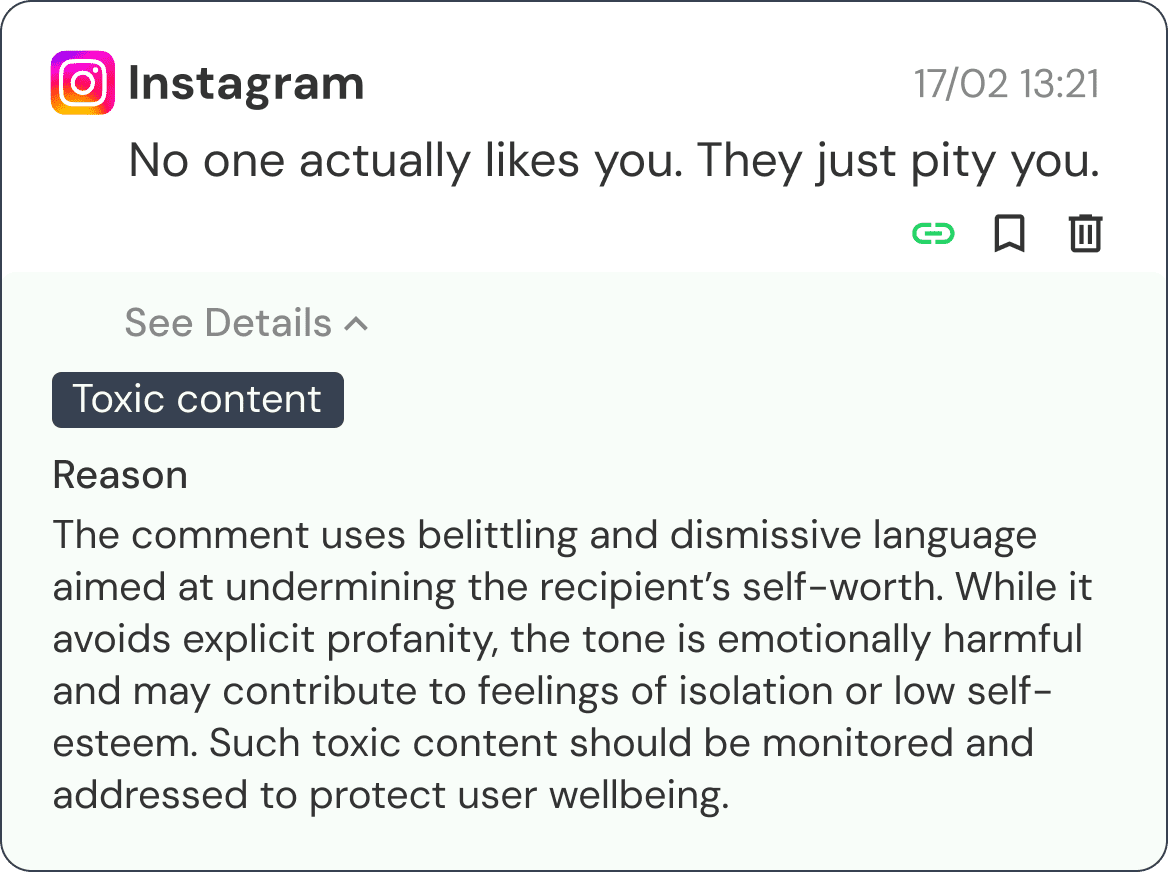
With that access comes exposure and one of the most serious threats children face online today is cyberbullying. Unlike traditional bullying, cyberbullying uses technology to harass, intimidate, or threaten a targeted individual. And because it leaves a digital footprint, the harm doesn’t stay in school boundaries, it follows your child’s home, onto their screen, and into their bedroom.
As a parent, knowing the signs early can make all the difference. Research from the Cyberbullying Research Center shows 58.2% of teens have experienced cyberbullying, yet fewer than 1 in 4 ever tell a parent about it.
Why Teens Don’t Tell Their Parents About Cyberbullying
Most teens going through cyberbullying suffer in silence. That silence can be frustrating for parents who just want to help. But there are real reasons behind it.
- Fear of losing their phone. For teens, their device holds their entire social life. Many stay quiet simply because they’d rather endure the bullying than risk being cut off from the social world.
- The line between friendship drama and actual cyberbullying can be blurry for teens. What feels like a falling out might actually be targeted harassment.
- It’s just awkward to bring up. Even when a teen wants to reach out for help, starting that conversation with a parent feels uncomfortable and they often don’t know where to begin. This is why creating an open, judgment-free space at home matters more than most parents realise.
- They think they can sort it out themselves. Asking for help can feel like weakness, especially for older teens who want to appear independent.
- The shame feels worse than the bullying. If embarrassing or hurtful content has been shared about them, the idea of a parent seeing it can feel mortifying so they’d rather say nothing at all.
Not sure what’s happening in your teen’s online world? Chatstat monitors their public social media so you don’t have to guess. It offers social media monitoring for families so you can stay informed without prying. Try Chatstat for free
Cyberbullying Warning Signs to Watch Out For
Cyberbullying doesn’t always look the way you’d expect. Most of the time, it shows up in small, easy-to-miss changes. Here’s what to keep an eye on. Many signs of cyberbullying social media parents worry about are subtle and can shift day to day.
Social & School Life
- They quit activities or hobbies they used to love with no real explanation.
- Suddenly “feeling sick” every time school or a social event comes up.
- A friendship group that falls apart overnight, or a best friend who just disappears from the picture.
Emotional & Physical Wellbeing
- Mood swings that seem tied to their phone: fine before, visibly upset after.
- Sleeping too much, not sleeping at all, or barely eating.
- Small comments that stick with you: things like “nobody actually likes me” or “what’s the point.” Don’t brush these off as teen dramatics.
Device & Online Behaviour
- Going quiet on social media after being constantly active.
- Snapping the phone face-down or closing apps the second you walk into the room.
If you’re unsure, privacy-respecting media tracking of public profiles can help surface patterns and give context without intruding.

How to Talk to Your Teen About It
How you respond in that first conversation can determine whether your teen opens up or shuts down completely. Use the conversation to share a few practical online safety tips for parents while keeping the focus on listening.
- Stay connected to their online world. Most parents aren’t connected to their child’s social media, and that’s where the bullying is happening.
- Don’t just take the phone away. Removing the phone feels like protecting them but posts, comments and screenshots don’t disappear with it. Anyone in their social circle can still see it, and finding out secondhand that something hurtful is being said about you can hit just as hard.
- Know when to step in. If explicit images are being shared, contact authorities. If it’s name calling, focus on building resilience and encouraging real-life friendships.
- Be transparent about monitoring. If you use parental monitoring software, tell your teen. Frame it around keeping them safe, not punishing them. Consider a trustworthy social media monitoring tool to make this easier, monitoring your child’s public social media activity and alerting you to anything concerning, without going through their private messages. It’s the middle ground between knowing nothing and invading their privacy.
Every conversation starts with knowing what’s going on. Chatstat monitors your child’s public social media and flags anything concerning, so when you sit down to talk, you already know what to ask. It’s designed as social media monitoring for families who want clarity without overreach.
Steps to Take If You Suspect Cyberbullying
Knowing what to do if your child is being cyberbullied can feel overwhelming, but acting quickly and calmly makes a real difference.
Here’s where to start:
- Start with a conversation. Before anything else, open the door. Listen without jumping straight into fix-it mode, your teen needs to feel heard before they’ll accept help.
- Document everything. Screenshot messages, posts and comments before they get deleted. Note the dates, platforms and anyone involved.
- Report it to the platform. Every major social media platform has reporting tools. Use them. If offensive material hasn’t been removed within 48 hours, escalate it.
- Contact the school. If classmates are involved, the school needs to know even if it’s happening outside school hours. Ask whether they use a school cyberbullying prevention tool or have a clear reporting pathway for digital incidents.
- Involve authorities when necessary. If your child is receiving direct threats or explicit images are being shared, contact law enforcement immediately, this is illegal.
- Don’t forget their mental health. Cyberbullying can leave a lasting impact. If your teen seems withdrawn, anxious or low, speak to a school counsellor or mental health professional. You don’t have to have all the answers, getting them support is enough.
The earlier you know, the more you can do. Chatstat gives you real time social media alerts on your child’s public social media activity; no snooping, no drama.
Final Thoughts
Cyberbullying is rarely obvious and by the time most parents notice something is wrong, it’s already been going on for a while. You don’t have to wait for that moment.
Staying connected to your teen’s online world, keeping the lines of communication open, and knowing what to look for puts you in a far better position to help when it matters most.
And if you’re not sure where to start, that’s okay. Tools like Chatstat are designed to give parents that early visibility, so you can step in before things escalate rather than after.
Because the best time to have the conversation is before your child feels like they have no one to turn to.
Cyberbullying thrives in silence. Chatstat helps you break it, before it breaks your child.
References
Child Mind Institute. (n.d.). How to talk to teens about cyberbullying [Video]. YouTube. https://www.youtube.com/watch?v=NVGVPaizgXE
Children and Screens. (n.d.). It’s not funny . https://www.childrenandscreens.org/learn-explore/research/its-not-funny/
eSafety Commissioner. (n.d.). Cyberbullying: Guide for parents and carers . Australian Government. https://www.esafety.gov.au/parents/issues-and-advice/cyberbullying
Family Online Safety Institute. (n.d.). 5 reasons youth don’t report cyberbullying and what parents can do about it.https://fosi.org/5-reasons-youth-dont-report-cyberbullying-and-what-parents-can-do-about-it/
ReachOut Parents. (n.d.). How to deal with online bullying as a parent . https://parents.au.reachout.com/staying-safe-online/cyberbullying/how-to-deal-with-online-bullying-as-a-parent
SA Department of Education. (n.d.). Cyberbullying: Recognising the signs . https://www.education.sa.gov.au/parents-and-families/bullying-support/cyberbullying-recognising-signs
UNICEF. (n.d.). Cyberbullying: What is it and how to stop it . https://www.unicef.org/stories/how-to-stop-cyberbullying
YourTown. (n.d.). What kids wish parents knew about cyberbullying . https://www.yourtown.com.au/blog/what-kids-wish-parents-knew-about-cyberbullying
Deakin University. (n.d.). Cyber safety: 5 ways to deal with cyberbullying . https://this.deakin.edu.au/society/cyber-safety-5-ways-to-deal-with-cyberbullying/
Dolly’s Dream. (n.d.). A step-by-step guide to reporting cyberbullying . https://www.dollysdream.org.au/blog/a-step-by-step-guide-to-reporting-cyberbullying/
🌍 Support services are shown based on your location. You can choose another country below if needed: